
I don’t know how exactly I heard about her. I consider myself a CINO(Catholic in Name Only), since I was Baptized as a baby but that’s about it. Nevertheless, I felt I HAD to make this article today of all days since she is celebrated on March 17, which is today as of when the article is published. Especially since, while she’s unofficial, she is still a Saint. It also does fit the theme of women’s history month. Plus, I love cats.
Overview of Saint Gertrude’s Life
Early life and education at Helfta
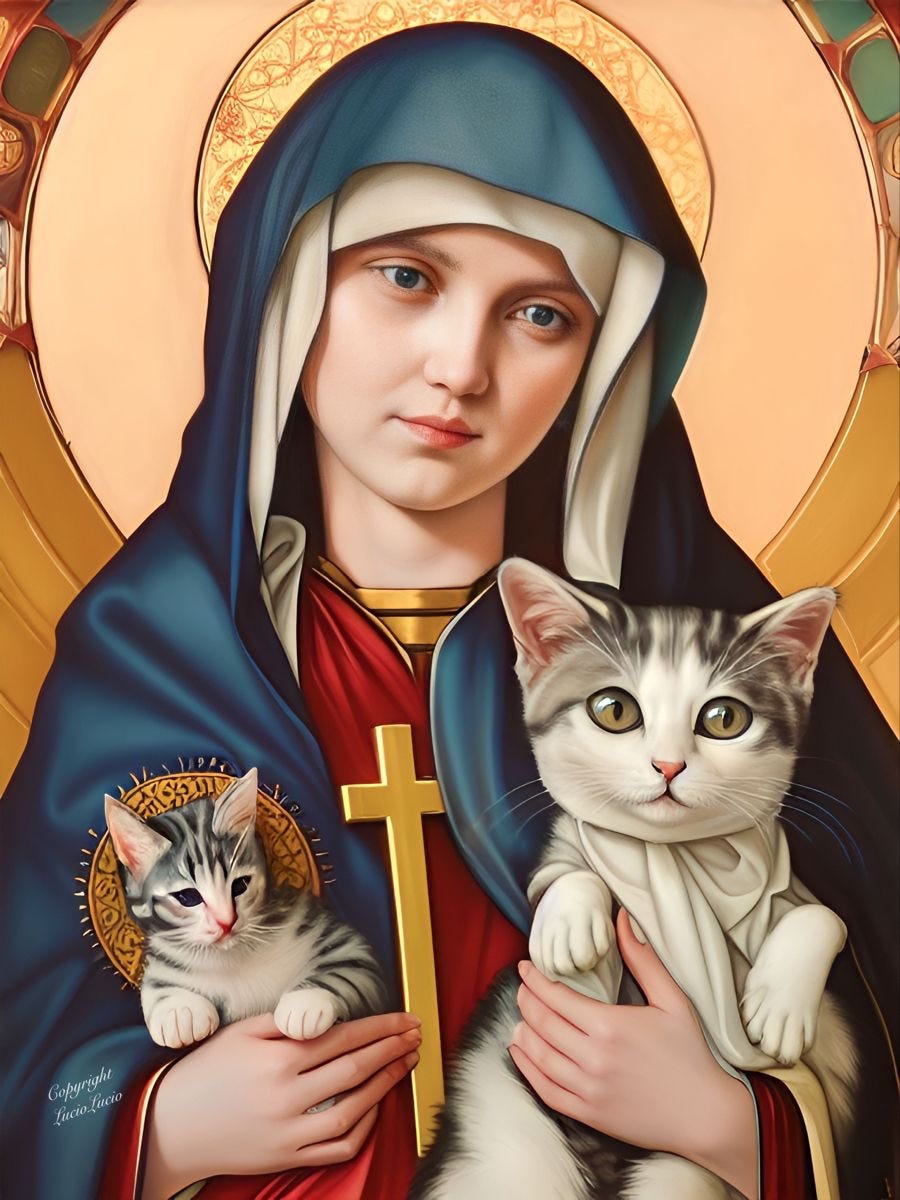
Saint Gertrude the Great, born on January 6, 1256, in Eisleben, Germany, began her extraordinary journey at a young age. At just five years old, she was enrolled in a Cistercian monastery school at Helfta, a place known for its rich spiritual and academic atmosphere. Surrounded by the teachings of the faith and the supportive community of nuns, Gertrude developed a remarkable intellect and a profound devotion to God.
Her early years were marked by a diligent pursuit of education, where she excelled in scripture, philosophy, and the teachings of the Church Fathers. Among her mentors was the Abbess Gertrude of Hackeborn and her sister, St. Mechtilde, who nurtured her spiritual growth. Gertrude’s education was not merely academic but deeply intertwined with her spiritual formation, leading her to embrace the monastic life officially when she joined the Benedictine order.
Transition to a mystical vocation
Gertrude’s spiritual trajectory took a significant turn around 1281, when she began experiencing vivid mystical visions. It was a defining moment that redirected her life’s purpose from secular pursuits to a deeper engagement with theology and personal prayer. She described this awakening as a “new birth,” marking her transition to a devoted mystic.
The experiences she underwent were transformative, culminating in what is known as “nuptial mysticism,” a spiritual practice through which Gertrude came to see herself as the bride of Christ. This intimate relationship with Jesus illuminated her understanding of scripture and the divine, leading her to write extensively about her experiences and insights.
Relationship with Mechtilde and the Church
The bond between Gertrude and Mechtilde was pivotal in her spiritual journey. Together, they influenced the spiritual practices within their community, emphasizing the importance of personal devotion merged with the communal aspects of monastic life. Their strong friendship and shared mystical experiences fostered a supportive environment in which both nuns could grow in their respective callings.
Gertrude’s contributions to the Church were significant, even in her lifetime. Her writing and teachings resonated with many, leading to her recognition as an influential mystic and theologian. Despite the absence of formal canonization, her legacy flourished posthumously, evidenced by the approval of a liturgical office of prayer in her honor by the Vatican in 1606, and her feast day celebrated on November 16.
Mystical Experiences and Writings
Vivid visions and theological insights
Gertrude’s mystical experiences were profound and varied. One especially notable vision involved her resting near Jesus’ side, where she claimed to feel the heartbeat of Christ. This experience not only deepened her personal relationship with the Savior but also allowed her to engage with the broader themes of love and redemption in her later writings.
Not only did these visions offer her deep insights and theological reflections, but they also significantly shaped the Catholic mysticism of her time. Gertrude’s approach was both passionate and innovative, as she melded personal revelations with established doctrines to articulate a more intimate understanding of God’s love.
Major works and their significance
Among her numerous writings, Gertrude’s most recognized work is The Herald of Divine Love. This composition catalogues her visions and contemplations, emphasizing her devotion to the Sacred Heart of Jesus. The work not only reflects her mystical insights but also serves as a guide for others seeking a deeper spiritual life and relationship with God.
In addition to The Herald of Divine Love, Gertrude’s other notable writings include a collection of Spiritual Exercises and prayers, which have inspired countless individuals in their spiritual pursuits. These texts illustrate her commitment to fostering spirituality through personal reflection and expression, making her an essential figure in the development of Christian mysticism.
Influence on mysticism and devotion
Gertrude’s influence on the field of mysticism extended beyond her lifetime. Her ideas, particularly those surrounding the Sacred Heart of Jesus and the nature of divine love, laid the groundwork for future mystical traditions. She became a significant figure among the Discalced Carmelites and other religious communities, where her works were embraced for their depth and theological richness.
Her focus on the sacredness of the heart and the profound connection individuals can have with Jesus continues to resonate with modern spirituality. The heartfelt compassion she extended towards the souls in Purgatory has coined her as a patroness for those in need of intercession, further solidifying her place in Christian devotion.
Patronage of Cats and the Forgotten History
Roots of Gertrude’s connection to felines
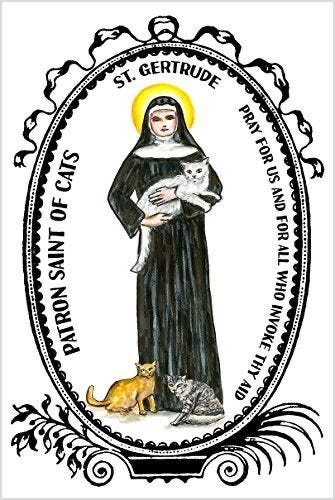
The association between Saint Gertrude and cats has evolved over the centuries and is often shrouded in mystery. While she may not have had a direct affinity for cats during her lifetime, her role as a protector against vermin made her a symbolic figure in the fight against pests. This connection emerged as her prayers were thought to ward off mice and rats, animals that were considered troublesome in monasteries and households alike.
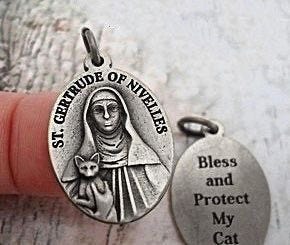
As a result, cats, known for their skills in hunting these pests, became indirectly linked to the saint. People soon began to invoke her name for the protection of their feline companions, solidifying her status as the patron saint of cats.
The story of her patronage evolution
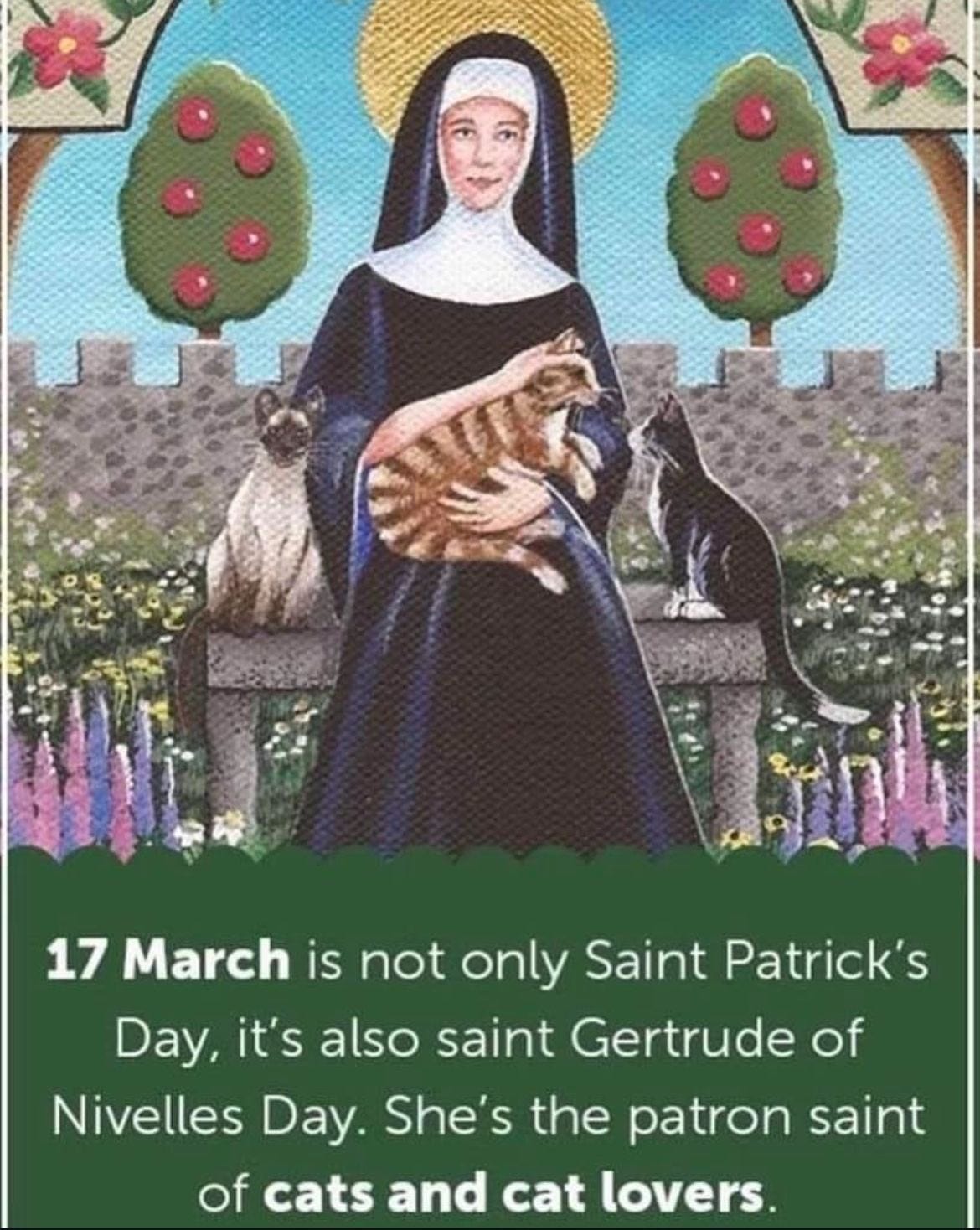
Interestingly, the formal recognition of Saint Gertrude as the patron saint of cats did not occur until relatively recently, around the early 1980s. Her mention in an art catalog marked a cultural resurgence that connected her to felines, highlighting an endearing aspect of her legacy that continues to flourish, especially among cat lovers today.
Traditions surrounding Saint Gertrude’s day, celebrated on March 17, often include activities involving cats, as her spirit of care for all creatures becomes a focal point of observance. This unique blend of history and devotion reflects the quirky yet devoted ways people honor saints in their lives, oftentimes selecting aspects that resonate with their contemporary experiences.
Cultural significance in medieval times
During medieval times, Gertrude’s influence and reputation as an animal protector paralleled cultural views on the relationship between humans and animals. She became a figure of solace, particularly for the vulnerable, whether they were the souls in Purgatory or domesticated animals in need.
Medieval art often depicted her alongside various creatures, including mice at her feet, serving as a visual reminder of her protective qualities. This emphasis on the interconnectedness of human, divine, and animal realms highlighted the holistic view of spirituality prevalent during that period.
Legacy and Celebration of Saint Gertrude
Feast days and liturgical recognition
Saint Gertrude’s memory is honored with Feast Days on November 16, and she is celebrated in various Christian traditions, particularly within the Catholic Church. Through these observances, her teachings and mystical experiences continue to inspire new generations, fostering a climate of reverence and gratitude.
The acknowledgment of her contributions to the spiritual life within the Church has only grown over the years. Modern liturgical practices allow for the integration of her writings and insights, helping to keep her legacy alive.
Influence in modern spirituality and art
In contemporary times, Saint Gertrude’s impact on spirituality can be witnessed in various religious communities that draw from her writings and teachings. She is frequently cited in discussions about mysticism, divine love, and the importance of personal prayer, solidifying her position as a guiding light for those seeking a deeper connection with the divine.
Additionally, her connection to art persists, as depictions of Saint Gertrude often evoke her gentleness and deep compassion, highlighting her enduring legacy within religious iconography.
Commemoration in various communities
Across the globe, numerous parishes, schools, and communities celebrate Saint Gertrude with namesake dedications, prayers, and gatherings. This diverse commemoration serves as a testament to her significance in Christianity, resonating with people from different cultures and walks of life.
In communities where cats are cherished, her patronage is embraced even more enthusiastically. Festivals, pet blessings, and special observances honoring Saint Gertrude capture the hearts of animal lovers while tying back to the historical and spiritual roots of her compassion for all living beings.
Through these various expressions of devotion, Saint Gertrude remains a beloved figure whose life and contributions continue to impact the faithful. Her journey from a young girl dedicated to academia to a revered mystic provides an engaging narrative that transcends time and speaks to the heart of human experience.
Reference